How I Trained My African Grey Parrot to Eat Vegetables After Years on Grains

Discover how I switched my African Grey parrot from a grain-only diet to fresh vegetables using sprouting, the Morning Hunger Technique, and simple flock-behavior tricks.
When I first brought my African Grey home, he was happy living on a mixed seed-and-grain diet. The problem? Birds need much more than dry grains to live long, healthy lives. So I started a slow journey to get him eating fresh vegetables, and I want to share exactly how I did it.
This guide is everything I learned, in the order I learned it. If you have a “picky” parrot at home, this post will walk you through every step.
Table of Contents
- What My African Grey Was Eating Before
- Step 1: I Started Sprouting His Grains First
- Step 2: I Learned His Eating Schedule (The Morning Hunger Technique)
- Step 3: I Started Adding Tiny Pieces of Vegetables
- Step 4: I Ate Vegetables in Front of Him
- Step 5: I Played YouTube Videos of Parrots Eating Vegetables
- Step 6: I Was Ready for Rejection (And It Came)
- Step 7: I Got the Presentation Right
- What Foods I Always Avoid
- The Most Nutrient-Dense Vegetables to Aim For
- My Daily Feeding Routine Now
- What I Would Tell Anyone Starting This Journey
- Frequently Asked Questions
What My African Grey Was Eating Before
Before I changed anything, my parrot was on a dry grain-and-seed mix. He loved it and had been eating it for a long time. The mix included green grams (mung beans), finger millet, sorghum, yellow corn, wheat berries, buckwheat, barley, oats, brown rice, quinoa, wheat, and groundnuts.
I want to be clear about one thing. I did not stop feeding him these grains. They are still part of his diet. But the way I serve them changed in a big way, and that change opened the door to everything else.
The first thing I had to figure out was how much of each food he actually needed in a day. I was overfeeding him at first without even knowing it, which is one reason birds on a grain-heavy diet end up overweight.
Step 1: I Started Sprouting His Grains First
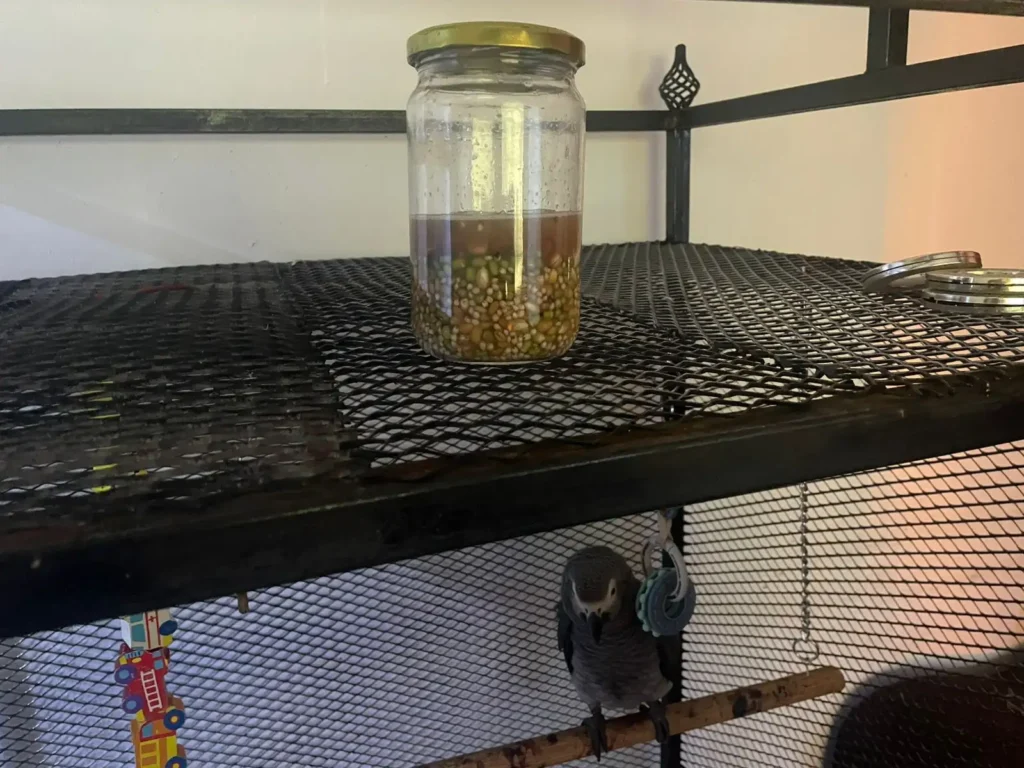
Sprouting was the bridge between dry food and fresh food. Instead of jumping straight to raw vegetables (which would scare any seed-loving bird), I started by soaking and sprouting the same grains he already trusted.
Why Sprouting Changed Everything
Sprouting is more than just wetting a seed. It turns a dormant grain into a living plant, and that changes the nutrition in a big way.
Better mineral absorption. Dry grains contain something called phytic acid. This acid prevents the bird from absorbing minerals such as calcium, magnesium, and zinc. Sprouting neutralizes phytic acid, so my parrot finally got the full mineral value from his food.
More vitamins. As a grain sprouts, its vitamin levels rise quickly. Sprouted grains have much higher levels of Vitamin A (great for feathers and breathing), Vitamin C (immune support), and B-complex vitamins (energy and nerves).
Easier to digest. Sprouting breaks down complex starches into simple sugars. It also starts breaking down proteins into amino acids. This means my parrot’s body required less work to get the same amount of nutrition.
Live enzymes. Sprouted foods are rich in digestive enzymes. These help the bird break down the other foods he eats. This matters even more for older birds.
Lower fat, more water. During sprouting, the seed burns its stored fat to fuel growth. The final food is lower in fat and higher in fiber. It also has more water, which helps with hydration.
Quick Safety Note on Sprouting
Hygiene is everything when sprouting. I rinse my sprouts every 8 to 12 hours. They should always smell fresh and earthy, like soil after rain. If they ever smell sour or feel slimy, I throw them out right away. Mold and bacteria can make a parrot very sick.
Tip: If you find it hard to keep sprouts clean by hand, a set of dedicated glass sprouting jars with stainless steel mesh lids makes drainage easy and lowers your mold risk. For people who want a hands-off setup, an automatic countertop sprouter handles the rinsing on a timer.
Step 2: I Learned His Eating Schedule (The Morning Hunger Technique)
Before I tried to change his diet, I just watched him for a few days. I wrote down exactly when he ate.
I noticed two clear windows.
- Morning: 6 AM to 9 AM
- Evening: 6 PM to 9 PM
This was huge. I call it the Morning Hunger Technique, and it became the secret behind every food change after this.
The idea is simple. If a parrot is full of grains in the morning, he has zero reason to try a broccoli floret. But if I offer something new during his natural hunger window, when his belly is empty, and his interest is high, he is much more likely to take a bite.
So I started putting his sprouted grains in his bowl right at 6 AM. And the difference was immediate. He attacked them. He seemed brighter and more active. The live, fresh food woke something up in him.
Step 3: I Started Adding Tiny Pieces of Vegetables
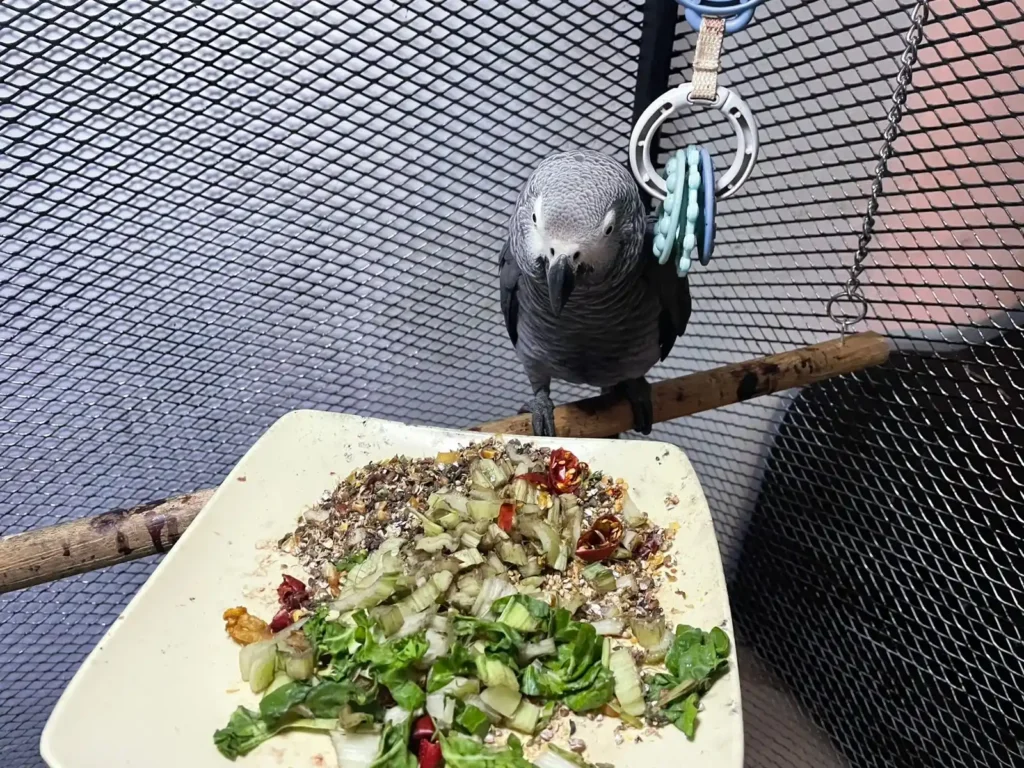
Once he was happily eating sprouts, I began the real work. I started mixing in small amounts of finely chopped raw vegetables right into the sprouted-grain mix.
I started with these:
- Chili peppers (with seeds)
- Bell peppers (with seeds)
- Sweet corn
- Coriander (cilantro)
- Spinach
- Carrots
- Kale
- Broccoli
- Sugar cane
The trick was to make the vegetables look familiar. By chopping them small and mixing them with the sprouts he already loved, the new food did not stand out as “scary.”
Sugar cane became one of his absolute favorites. I have a short video of him going to town on a piece of sugar cane, and you can see exactly how much he enjoys it.
Why Parrots Are Scared of New Food
This is called neophobia, which just means “fear of new things.” Parrots in the wild stay safe by being suspicious of anything they have not seen before. A pile of kale can look like a green monster to a bird that has only ever seen beige grains.
The fix is to make the new food feel familiar. Three tricks worked for me:
- Match the texture. Chop the vegetables to roughly the same size as his grains. He could not pick out and toss the “weird bits.”
- Mix, do not replace. I never took away his grains and replaced them with veggies. I added the veggies to the mix.
- Use the same bowl. Same spot, same dish, same time of day. Only the contents changed slowly.
Step 4: I Ate Vegetables in Front of Him
This step felt silly at first, but it works. Parrots are flock animals. In the wild, they watch other birds (and their human family) to figure out what is safe to eat.
So when I had dinner, I made a point of eating vegetables in front of him. I would hold up a piece of bell pepper, say “mmm,” chew with big, happy motions, and act like it was the best thing I had ever tasted.
I also shared cooked vegetables from my own plate (the bird-safe ones, plain, no salt or oil). When he saw me enjoying the same food, his curiosity grew. He started taking nibbles just to see what the fuss was about.
Step 5: I Played YouTube Videos of Parrots Eating Vegetables
Here is one trick that surprised me with how well it worked. During his morning and evening eating sessions, I played YouTube videos of other parrots eating vegetables on my phone or laptop, placed near his cage.
Parrots eat more when they feel they are eating with a flock. It is a deep instinct. When my African Grey saw and heard other birds munching away, he joined in. He ate more, faster, and tried foods he had ignored the day before.
I call this the Virtual Flock Effect, and it is now part of his daily routine. For some strange reason, the video below is his favourite, and he immediately gets hunger pangs when he sees these parrots eating brightly colored fresh strawberries, raspberries, and cauliflower.
Step 6: I Was Ready for Rejection (And It Came)
For the first few days, he did not want the vegetables. He picked them out. He flicked them onto the floor. I had to remove the uneaten veggies after a couple of hours to keep things clean.
This is normal. I want any reader to know this clearly: rejection on day one does not mean your bird hates the food. It just means he has not yet decided it is food.
A grain-fed parrot can take weeks, sometimes months, to take that first real bite. Patience is the real secret ingredient.
What I Did During the Rejection Phase
- I kept offering the mix at his hunger windows.
- I tried a wide variety, not just a few veggies. This let me find his favorites.
- On the most stubborn days, I covered tiny pieces of veggies with a thin coat of fruit juice or mixed them into a small spoonful of cooked, mashed sweet potato.
- I never forced him. Force creates more fear.
Try at least 8 to 10 different vegetables in the first two weeks, and write down which ones he goes for first. Every bird has favorites. Mine surprised me by loving chili peppers and initially ignoring carrots.
Step 7: I Got the Presentation Right
How you serve the food matters almost as much as what you serve. Here are the tricks I used to make vegetables more attractive.
Chop fine. I mince the vegetables small so he cannot dig out and dump the “good” bits. This style is called “Chop” by bird keepers.
Hang leafy greens. I clip whole kale, spinach, or romaine leaves to the side of his cage. Foraging from a hanging leaf is a natural behavior, and he finds it much more fun than eating from a bowl.
Lightly steam hard veggies. Raw, cold sweet potato or carrot can feel strange in a parrot’s mouth. A quick steam softens them and brings out the sweetness, making my parrot far more willing to try them.
What Foods I Always Avoid
This list is just as important as everything else. Some foods that are healthy for humans are dangerous, even deadly, for parrots. I never give my bird any of these.
- Onions and garlic. These can cause hemolytic anemia, which damages red blood cells.
- Avocado. Contains persin, a cardiotoxic toxin to birds. It can be fatal.
- Fruit seeds and pits. Apple seeds and cherry pits contain trace amounts of cyanide.
- Uncooked beans. Raw beans contain natural toxins that only break down with cooking.
- Mushrooms. Can cause digestive upset and liver problems.
I also remove any fresh food from his cage after 2 to 3 hours. After that, bacteria can grow fast and make him sick.
The Most Nutrient-Dense Vegetables to Aim For
Not all vegetables are equal for parrots. I avoid watery, low-value options like iceberg lettuce. Instead, I focus on heavy hitters:
- Dark leafy greens: Kale, collards, and dandelion greens for calcium and Vitamin A.
- Orange veggies: Carrots, squash, and steamed sweet potato for beta-carotene.
- Legumes: Sprouted mung beans or cooked lentils for clean protein.
- Bell peppers and chilies: Excellent Vitamin C, and birds cannot feel the heat from capsaicin the way we do.
My Daily Feeding Routine Now
Here is what a normal day looks like for my African Grey today.
6 AM to 9 AM (Morning Hunger Window): A fresh bowl of sprouted grains mixed with finely chopped vegetables. YouTube parrot-eating video playing nearby.
Mid-morning: Bowl removed, cage cleaned. Fresh water refilled.
Daytime: Foraging toys with a few dry grains hidden inside.
6 PM to 9 PM (Evening Hunger Window): Second serving of sprouted grains and chopped vegetables, sometimes with a hanging kale leaf clipped to the bars.
Bedtime: All fresh food removed to prevent spoilage.
What I Would Tell Anyone Starting This Journey
If I could give one piece of advice to a parrot owner who wants to make this same switch, it is this: go slow and stay calm. Your bird is not being difficult. He is being a bird. His brain is wired to be careful about new food, and that instinct kept his wild ancestors alive for millions of years.
Stay patient. Use his natural hunger windows. Sprout his old grains as a bridge. Eat in front of him. Play flock videos during meals. Try every vegetable until you find his favorites.
The day my parrot first chose a piece of bell pepper over a sunflower seed was one of the proudest days I have had as a bird owner. If I can get there, you can too.
Frequently Asked Questions
How long does it take to switch a parrot from grains to vegetables?
For most birds, expect anywhere from a few weeks to several months. My African Grey took about one week to start eating vegetables willingly every day.
Can I just stop the grains cold turkey?
No. We don’t recommend this option. A parrot can starve or go on a hunger strike rather than eat food it does not recognize. Always transition slowly while keeping his familiar food available.
Do sprouted grains replace fresh vegetables?
No, they are a bridge. Sprouted grains are far better than dry grains, but they do not give the full range of nutrients that fresh leafy greens and colorful vegetables provide.
What if my parrot still refuses everything after a month?
Stay consistent and try new presentation styles, hanging leaves, steaming, finer chopping, or mixing into mashed sweet potato. Talk to an avian vet if your bird is losing weight or seems unwell.
Is it safe to feed chili peppers to a parrot?
Yes. Parrots lack the receptor that makes mammals feel the burn of capsaicin. Chili peppers, including the seeds, are safe and rich in Vitamin A.